Apple Just Turned the iPhone Into a Subscription. Klarna Is Holding the Risk.
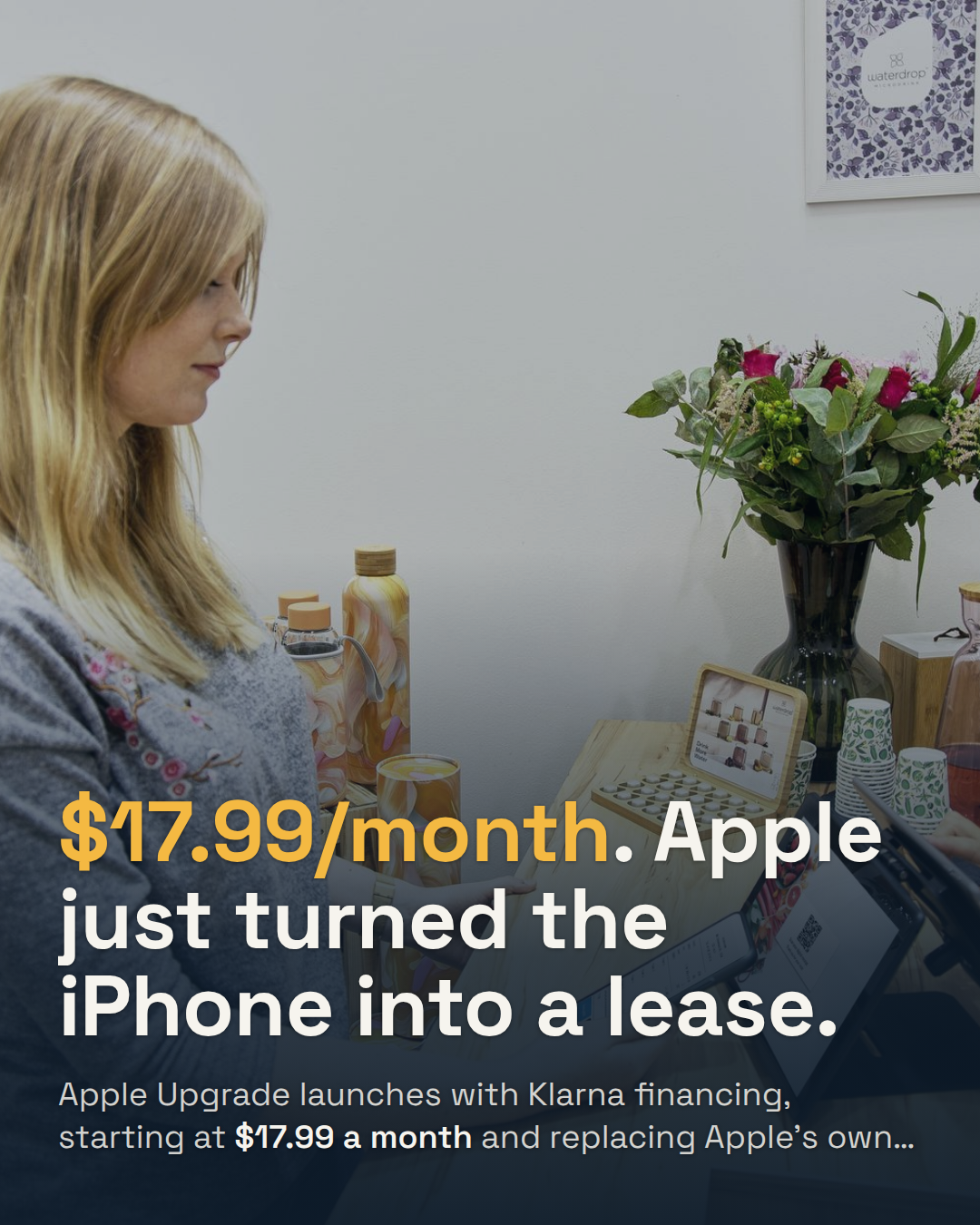
Apple launched Apple Upgrade on July 28, leasing iPhones from $17.99 a month via Klarna and killing its own financing plans, a subscription pivot with a hidden credit-risk transfer.
Fiscedge Academy
Contributing Faculty & Practitioner
News Breakdown · FiscEdge Academy
Apple launched Apple Upgrade on July 28, a device leasing program built with "buy now, pay later" firm Klarna. Customers can now lease an iPhone from $17.99 a month, a Mac from $24.99 a month, and an Apple Watch or iPad from $11.99 a month, available online, in the Apple Store app, and in US retail stores. To make room for it, Apple is killing its own in-house financing: the iPhone Upgrade Program and iPhone Payments are both being discontinued in the US.
The terms matter too: one- and two-year leases for iPhone and Apple Watch, two- and three-year leases for Mac and iPad. At the end of the term, customers can upgrade to the newest model, buy out the device with a lump sum, or hand it back and walk away. Qualifying only requires a soft credit check that doesn't touch your credit score, the lease is managed inside the Klarna app, and Apple Card holders earn 3% Daily Cash on every payment. Klarna's stock jumped as much as 11% on the news, to $20.78. Apple's barely moved, and the timing is not an accident: the program lands just two days before Apple's July 30 fiscal Q3 earnings call, where investors were already lining up questions about AI capex.
The pricing tiers are the least interesting part of this story. The signal underneath is that the largest hardware company on Earth just told the market, in public, that a one-time sale is no longer its default transaction. It replaced ownership with a recurring lease, handed the credit risk to a fintech partner, and did it in the same week Wall Street is grilling Big Tech on how it justifies runaway spending. That combination is the actual news.
The math Apple just outsourced
Every SaaS founder knows the appeal of a subscription: a smaller recurring number converts better than one intimidating upfront price, even when the recurring number adds up to more over time. Apple is applying that exact logic to a $999 iPhone, breaking it into a payment small enough to feel invisible next to a phone bill. What's new is who is now on the hook for the underwriting. Apple isn't building the credit infrastructure itself, it's renting Klarna's, the same way plenty of software companies rent Stripe or Adyen instead of becoming a payments company. The lease also changes how the sale shows up on a balance sheet: a transferred lease can be recognized differently from a point-of-sale purchase, and outside analysts are already asking how that reshapes reported hardware revenue versus financing revenue on Apple's own books.
Why this, why now
Analysts widely expect iPhone price increases later this year, and a leasing option is the cleanest way to keep the advertised monthly number flat even if the sticker price climbs. It also arrives the same week Apple, Microsoft, Meta, and Amazon report earnings under intense scrutiny over AI infrastructure spending. A leasing program that smooths consumer payments and quietly grows recurring, financed revenue is a convenient story to tell right when the market is nervous about how the rest of the capital is being spent.
The credit risk nobody has priced in yet
Klarna's stock pop tells you what investors think about the upside. What it doesn't tell you is the downside case: Morningstar flagged that Klarna's underwriting "has not been stress-tested" at this scale, and that today's low delinquency rates could be a poor predictor of losses once the economy tightens. Apple gets the growth optics of a subscription business without carrying the credit exposure. Klarna gets the volume, and all of the risk, from a customer base that skews toward exactly the kind of person who wants a $999 phone but can only stomach an $18 line item.
What it means if you run a subscription business
The lesson isn't "add a payment plan." It's that converting a purchase into a lease is a financing decision, not a pricing decision, and it changes three things at once: how revenue is recognized, who absorbs default risk, and how retention and churn actually get modeled once a customer can walk away instead of just canceling a plan. If you're building anything with an upfront cost, from hardware to annual contracts, this is the moment to model the leasing version properly rather than assume it's a copy-paste of your existing subscription math.
If you remember one thing
Leasing doesn't lower the cost of the product, it just moves the risk and the accounting; before you offer one, model exactly who eats a default and how it hits your revenue recognition, don't find out after the fact.
We teach this playbook in FiscEdge's financial modeling course and business fundamentals course. For the math behind why recurring revenue behaves so differently from one-time sales, read what are unit economics, and see how this fits a broader growth playbook in our startup strategy course. Follow @fiscedge for daily Business & AI analysis.
Topics & Categorization:
How interesting did you find this article?