Trump Extended the $100,000 H-1B Visa Fee Through 2027. A New Layoffs Rule Bites Immediately.
Trump extended the $100,000 H-1B visa fee policy through September 2027 while a new rule screens employers for recent layoffs, raising hiring risk for cash-strapped startups right now.

Fiscedge Academy
Contributing Faculty & Practitioner
News Breakdown · FiscEdge Academy
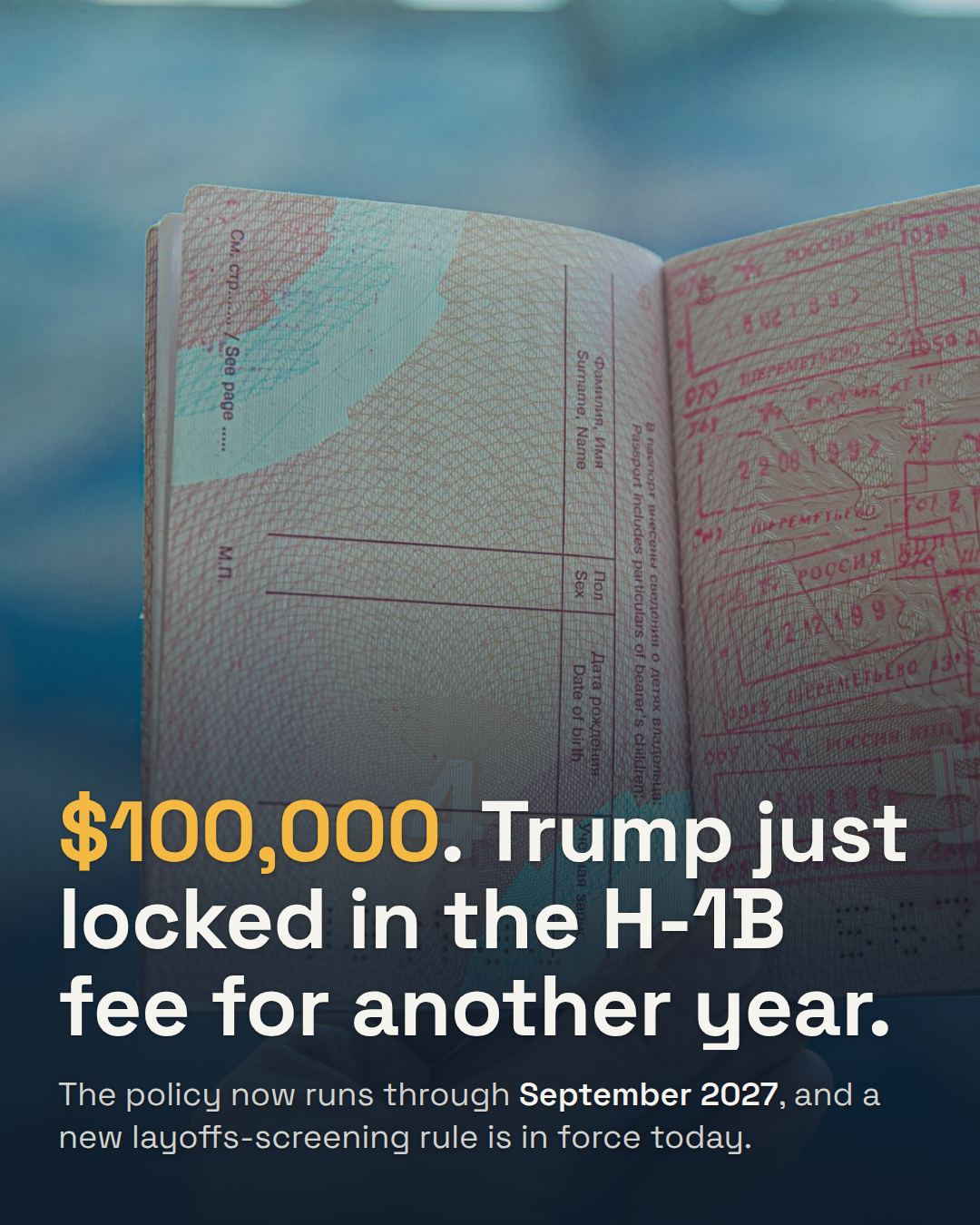
President Trump signed a proclamation on Friday extending the $100,000 H-1B visa fee policy for another year, pushing its expiration from this weekend out to September 21, 2027. The same day, the White House issued a second, separate order requiring immigration officials to screen H-1B employers for "recent or planned layoffs" of US workers, a rule that applies to pending petitions and takes effect immediately.
The original policy, first imposed by proclamation in September 2025, raised the fee for new H-1B petitions filed from outside the US from the traditional $2,000 to $5,000 range up to $100,000 per worker. The White House says the shock has worked as intended: it credits the fee with a roughly 92% drop in H-1B registrations from major IT outsourcing firms since the order took effect.
But the number that matters most to founders isn't $100,000. It's zero, which is roughly how many dollars USCIS can currently collect under the fee.
The fee is frozen, the clock isn't
A federal judge in Massachusetts ruled in June that the $100,000 charge functions as an unauthorized tax rather than a regulatory fee, and vacated it. The administration appealed and asked the First Circuit Court of Appeals to let it keep collecting the fee during that appeal. The court said no, denying the stay in late July. So as of this week, the fee itself is not being charged.
What Friday's proclamation extends is the underlying authority, not active collection. Instead of the policy lapsing this weekend while the appeal drags on, it now runs through September 2027. If the administration wins on appeal, or the Supreme Court eventually takes the case and sides with the White House, the $100,000 charge can snap back into force for a full extra year with no need to relitigate the policy from scratch. Founders budgeting around "this fee is dead" are reading the wrong headline; the correct read is "this fee is dormant, not repealed."
The rule that bites today, no litigation required
The layoffs-screening order is the more immediate problem, and it isn't tied up in the same court fight. It directs agencies to weigh recent or planned US layoffs when deciding whether to approve H-1B petitions, including ones already filed and sitting in the queue. A startup that ran a reduction in force this year, even one unrelated to the role being sponsored, now has a documented reason for a pending or future H-1B petition to get extra scrutiny or an outright denial.
This is the signal under the headline: even while the $100,000 fee sits frozen in court, the government now has a second, fully operative lever to slow H-1B approvals. Founders should treat any past-year layoff as a live variable in their next visa filing, not a closed chapter, something we walk through when we cover hiring under cost pressure in FiscEdge's business fundamentals course.
What this changes for how you hire
For most seed and Series A companies, the practical math hasn't moved much from a year ago. Government data reported after the fee's first six months in effect showed only about 85 new H-1B petitions filed subject to the $100,000 charge, down roughly 87% from the prior year's volume. As the president of ACT | The App Association put it at the time, the only organizations that can realistically absorb the fee are large companies. That gap between well-funded incumbents and cash-constrained startups is now locked in for another year, not a temporary distortion you can wait out.
Two things belong in your planning now. First, if you're budgeting a new H-1B sponsorship for FY2027, model both scenarios: the fee stays frozen, or it reactivates mid-plan and adds $100,000 to a single hire's fully loaded cost, a swing worth stress-testing the way we teach in FiscEdge's financial modeling course. Second, build your visa strategy around the layoffs rule specifically, not just the fee: if a reduction in force is on the table, sequence it carefully against any H-1B filings already in flight.
The talent is moving, not disappearing
The predictable side effect is geographic. Canadian government labor data shows tech job postings from US firms up 22% over the past six months, as candidates and recruiters route around the fee entirely rather than fight it. For an early-stage company competing for the same senior AI and infrastructure talent as everyone else, that means the realistic alternatives to a frozen-but-not-dead US visa fee are a Canadian or UK hiring entity, remote-first offers, or leaning on O-1 and L-1 pathways that sit outside this specific proclamation, a build-vs-buy-vs-relocate tradeoff worth running through the operating playbook in FiscEdge's startup strategy course.
If you remember one thing
The $100,000 H-1B fee isn't currently being charged, but the policy authorizing it just got extended a full year, and a separate, unlitigated layoffs-screening rule is already live. Plan your next 12 months of technical hiring against both, not against the comforting read that the courts already killed this.
We teach founders how to run hiring and headcount decisions through exactly this kind of regulatory whiplash in FiscEdge's business fundamentals course and startup strategy course. Browse the full blog for more news breakdowns. Follow @fiscedge for daily Business & AI analysis.
Topics & Categorization:
How interesting did you find this article?