Netflix Beat Estimates. Its Stock Fell 9% Anyway Because of What It Stopped Reporting.
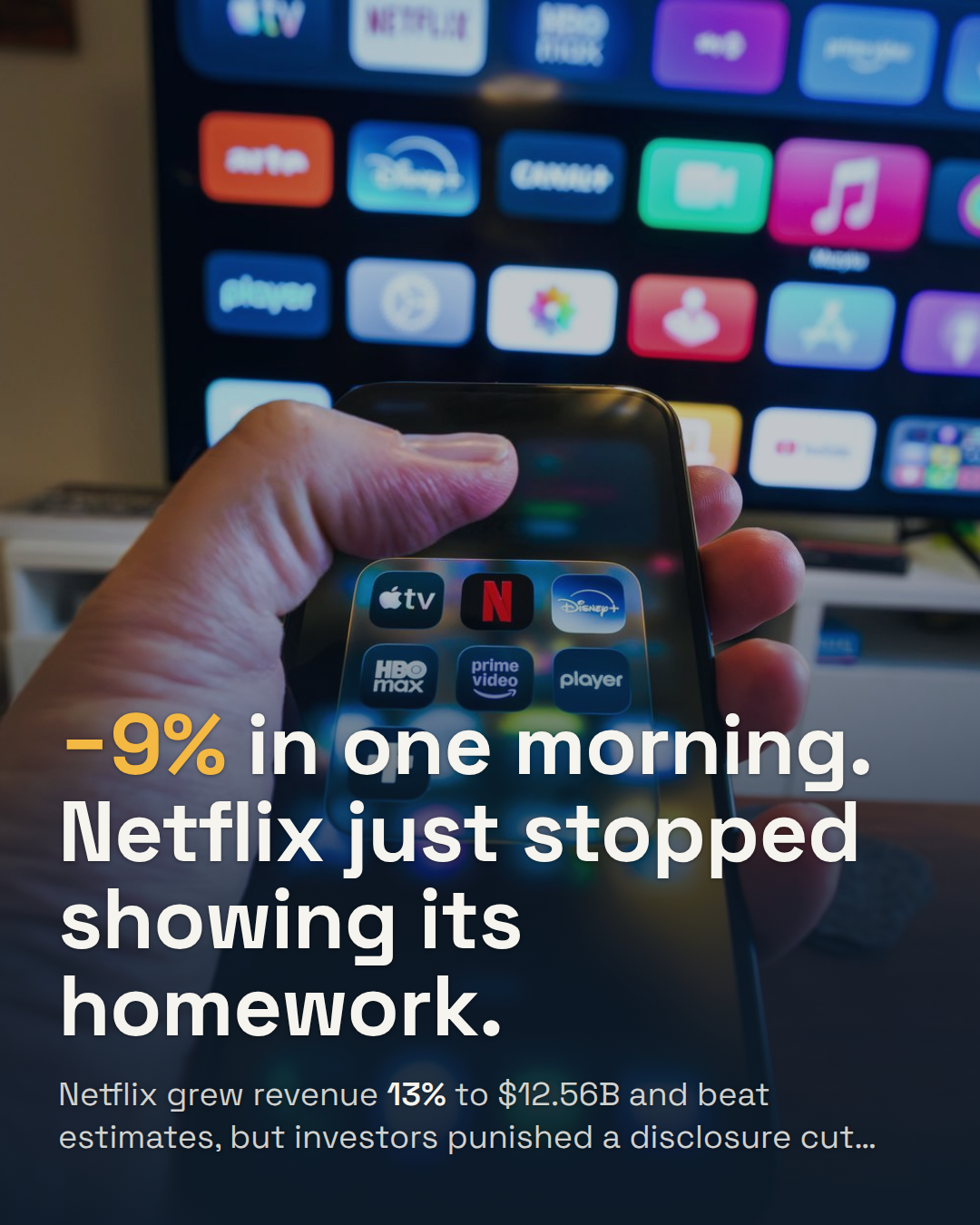
Netflix grew Q2 revenue 13% to $12.56B and still dropped as much as 9% after cutting engagement disclosure and giving soft Q3 guidance. The market is pricing transparency, not just growth.

Fiscedge Academy
Contributing Faculty & Practitioner
News Breakdown · FiscEdge Academy
Netflix beat Wall Street's Q2 estimates this morning and its stock still fell as much as 9% in early trading, on pace for one of its worst single-day drops of the year. Revenue climbed 13% year-over-year to $12.56 billion, and net income landed at $3.4 billion, or $0.80 a share. By every headline number, it was a good quarter.
Investors sold anyway. The trigger was twofold: a Q3 revenue forecast of $12.86 billion, implying an 11% FX-neutral growth rate, a clear deceleration from the current pace, and a decision buried in the shareholder letter that mattered more than the guidance miss. Netflix said it will now publish its viewing-hours engagement report once a year instead of twice, starting in 2027, extending a retreat from transparency that began when the company stopped reporting quarterly subscriber counts last year. The revenue number is the least interesting part of this story. The signal under the headline is what happens when a public company keeps beating its numbers while giving investors fewer numbers to check them against.
The pattern: fewer metrics, more mistrust
Netflix stopped reporting subscriber adds in 2025, arguing revenue and operating margin were the metrics that mattered. That argument held while growth was strong. Today it collapsed under its own logic: if revenue and margin are the only official numbers left, and the market doesn't fully trust the trajectory behind them, there's nothing left to triangulate against. Cutting engagement disclosure now, right alongside a guidance slowdown, reads less like "we've matured past vanity metrics" and more like "the underlying trend is worse than the summary line."
This isn't a Netflix-specific problem. It's what happens to any subscription business the moment growth cools: the metrics you chose to report become a referendum on how much you're hiding.
Why founders should care, even pre-revenue
Most SaaS founders will never file a 10-Q, but every founder makes the same disclosure decision on a smaller stage, in board decks, investor updates, and pricing pages. The lesson from today's selloff isn't "always report everything." It's that the market (or your board, or your next investor) punishes a reporting cut far harder when it lands next to decelerating growth than when it lands during a strong quarter. Timing your transparency changes matters as much as the change itself.
If you're building a subscription or usage-based product, the numbers that matter at seed and Series A (retention cohorts, net revenue retention, CAC payback) are exactly the ones an acquirer or later-stage investor will ask you to defend years from now. Get comfortable reporting them consistently before you're tempted to quietly stop, because stopping is a signal whether you intend it or not. That's the core idea we teach in FiscEdge's financial modeling course: pick metrics you can defend under pressure, not ones that only look good in a good quarter.
The deceleration is the real headline
An 11% FX-neutral growth forecast, down from 13% actual, is not a crisis for a company Netflix's size. But the market is now pricing streaming and subscription businesses on the assumption that growth only goes one direction from a mature base: down, gradually. That reframes what "good" guidance looks like for every subscription company reporting after Netflix this earnings season, including SaaS companies far smaller than it. Boards and investors will start asking sharper questions about the second derivative of growth, not just the growth rate itself. If you're preparing an investor update, get ahead of a slowing metric before someone else has to ask about it; the framing you choose the first time you report a deceleration sets the tone for every update after. We walk through exactly this kind of narrative-building around unit economics that survive investor scrutiny in the FiscEdge blog archive.
What this changes for how you operate
Three practical takeaways for founders and operators watching this play out:
- Pick your north-star metrics before you're under pressure to change them. Netflix chose revenue and margin over subscriber counts while things were going well; the choice looks defensive now that growth is slowing. Decide today which numbers you'll report at every stage of the company, not just the ones that flatter this quarter.
- A beat is not protection from a bad reaction. Beating consensus on revenue and earnings did nothing to offset weak forward guidance and a disclosure cut. Markets and investors price the trend, not the trailing quarter.
- Transparency is a trust account, not a cost center. Every metric you stop reporting withdraws from that account. Withdraw it when things are going well, if you must, never when growth is already decelerating.
If you remember one thing
The number that moved Netflix's stock today wasn't the revenue miss, because there wasn't one. It was the market concluding that a company reporting fewer numbers, right as growth slows, has something to hide. Whatever stage your company is at, decide your disclosure standards while you're winning, because the market (and your cap table) will assume the worst if you change them while you're not.
We teach founders how to build metrics and financial models that hold up under investor scrutiny in FiscEdge's financial modeling course and how to turn a growth slowdown into a credible narrative in startup strategy. Browse the full FiscEdge blog for more news breakdowns. Follow @fiscedge for daily Business & AI analysis.
Topics & Categorization:
How interesting did you find this article?