Nvidia Is in Talks to Back Perplexity at $30B+. That's a 50% Jump in Under a Year.
Nvidia is reportedly in talks to invest in Perplexity at a valuation above $30 billion, a 50% jump from last year, as the AI search startup's revenue triples to $750 million annualized.

Fiscedge Academy
Contributing Faculty & Practitioner
News Breakdown · FiscEdge Academy
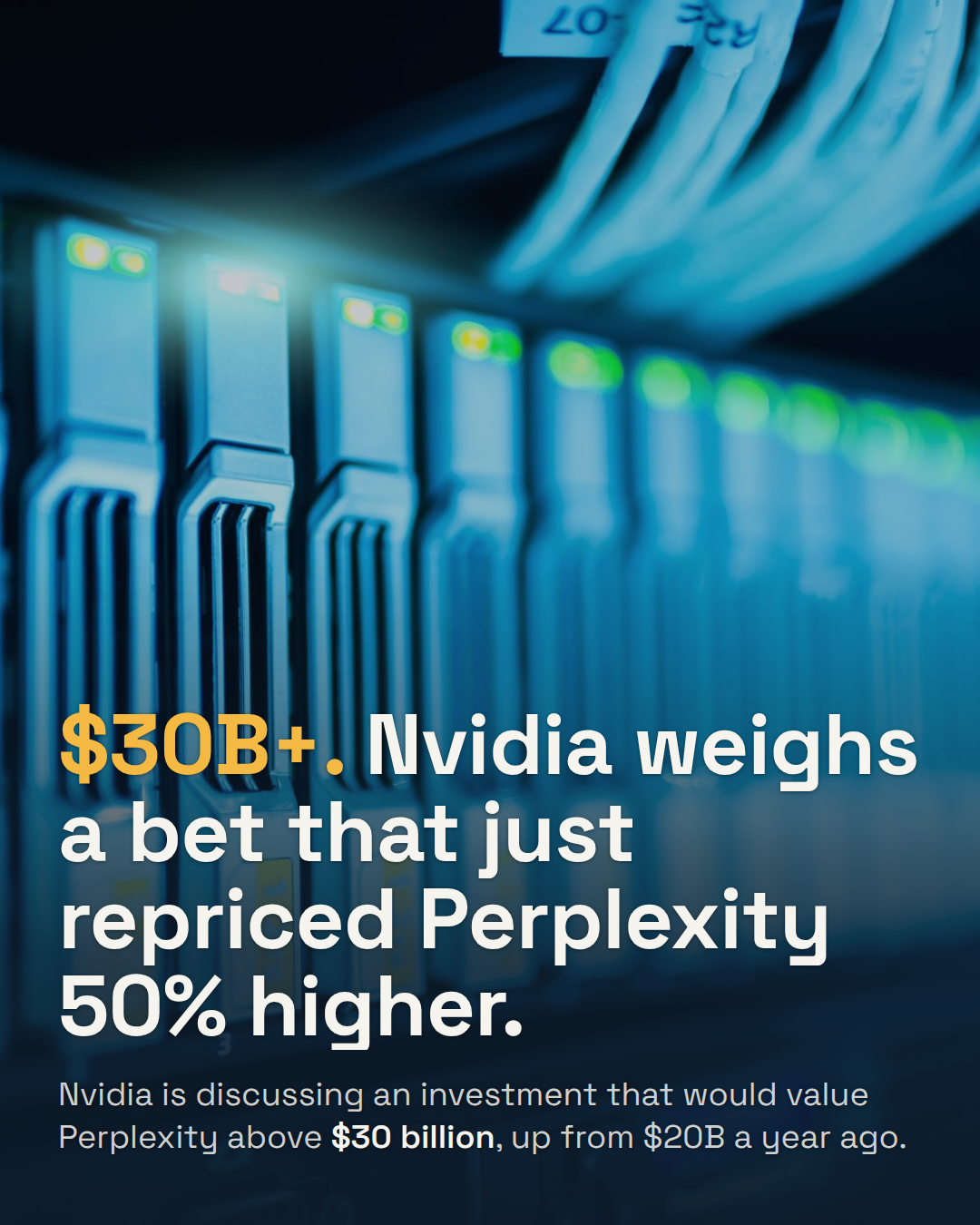
Nvidia is in talks to invest in Perplexity at a valuation north of $30 billion, according to The Information, which cited people familiar with the discussions. If the round closes at that number, it marks a jump of more than 50% from the roughly $20 billion valuation Perplexity locked in about a year ago.
The number behind the number is revenue. Perplexity's annualized run rate has climbed to more than $750 million, up from under $250 million at the start of the year, a threefold increase in under eight months. Perplexity declined to comment on the report; Nvidia did not immediately respond to requests for comment. Reuters, which ran its own story on the talks, said it could not independently verify the figures.
The signal under the headline
The valuation jump is the headline. The real story is what's driving it: Perplexity Computer, a cloud-based AI agent that automates computer-based tasks for professional users, launched earlier this year and has become a meaningful chunk of the revenue growth. That's a product-layer bet paying off, not just a search-engine story getting more traffic.
For founders building on top of foundation models, this is the clearest data point yet that the market is repricing agentic products faster than it's repricing chat interfaces. Perplexity didn't triple revenue by being a better search box. It tripled revenue by shipping something that does work autonomously and charging for the outcome.
Why Nvidia keeps writing these checks
This isn't Nvidia's first rodeo with Perplexity, and it fits a pattern the company has run all year: take equity stakes in the AI application layer that's buying its chips, then let the compute relationship and the cap table relationship reinforce each other. Nvidia has done versions of this with OpenAI, Anthropic, and now potentially a second bite at Perplexity. The strategic logic is straightforward: every dollar Nvidia puts in as an investor tends to come back as GPU demand, and every AI company that scales revenue on Nvidia silicon makes Nvidia's own growth story more durable.
For founders, the lesson isn't "get Nvidia to invest in you." It's that the biggest capital providers in AI right now aren't behaving like passive check-writers. They're picking winners in the layer above them and then using compute access, distribution, and follow-on capital to keep those winners winning. If you're building anywhere near the infrastructure layer, understanding who your platform's strategic investors are betting on is now part of competitive analysis, not just fundraising research.
What this means if you're raising right now
A 50%+ step-up in twelve months on the back of a 3x revenue run rate is an aggressive multiple even by 2026 AI standards, and it will get used as a comp in other rounds this quarter, for better or worse. If you're a founder fundraising in the AI application layer, expect investors to ask you to justify why you're not growing at Perplexity's clip, and expect the multiple conversation to get harder if you can't show usage-based revenue with a clear growth curve. Valuation comps like this travel fast through VC Slack channels and term sheets; know the number before your investor brings it up.
It also raises the bar on what "product-market fit" looks like at this stage of the AI cycle. A chatbot wrapper with steady month-over-month growth used to be a fundable story. A 3x in eight months, driven by an agentic product that does tasks rather than answers questions, is what's setting the pace now.
If you remember one thing
The valuation number is the headline, but the multiple only exists because Perplexity shipped a product that automates work, not one that just answers questions faster. If your growth story is still "better answers," the market is telling you the bar has moved to "does the job."
We teach how to read funding rounds and build a fundable growth narrative in FiscEdge's financial modeling course and AI for entrepreneurs track. If you're deciding what to build next in the agentic AI wave, our startup strategy course covers how to pick a defensible layer. Browse the full blog for more breakdowns like this one. Follow @fiscedge for daily Business & AI analysis.
Topics & Categorization:
How interesting did you find this article?