OpenAI Launches ChatGPT for Teens. Age Prediction Just Became a Product Requirement.
OpenAI rolled out ChatGPT for Teens on August 18, adding age prediction, content limits and parental controls, its answer to a wrongful death lawsuit and mounting AI safety scrutiny.

Fiscedge Academy
Contributing Faculty & Practitioner
News Breakdown · FiscEdge Academy
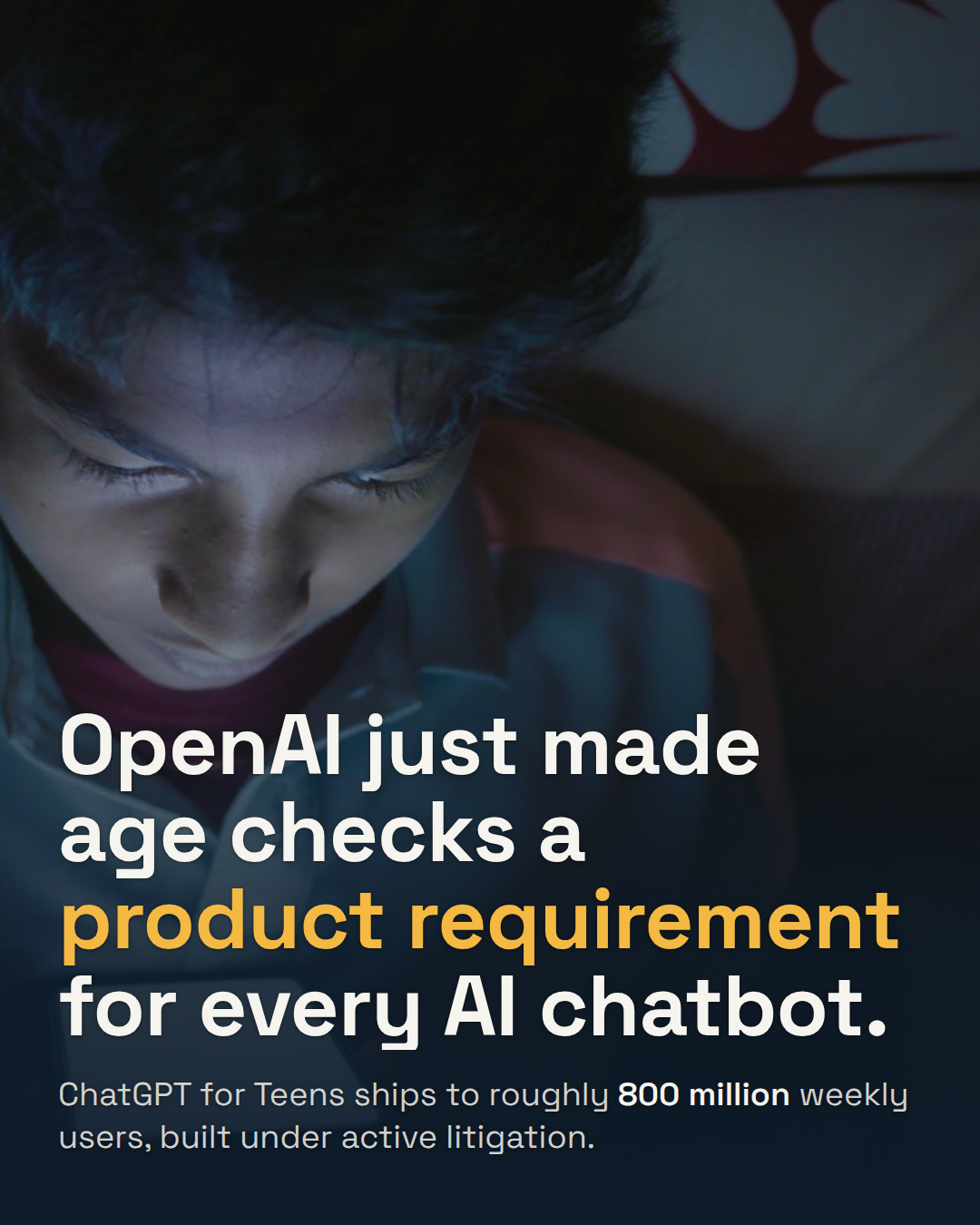
OpenAI rolled out ChatGPT for Teens on Tuesday, a separate, more restricted version of the product for users aged 13 to 17. Anyone who states that age, or whom OpenAI's new age-prediction system estimates to be under 18 based on behavioral signals, gets routed into it automatically. Romantic or sexual roleplay is blocked outright, the model is instructed not to imply it has feelings or consciousness, and content tied to suicide or self-harm triggers stricter limits than the adult product ever had. Parental controls, including linked accounts, chat-history visibility and blackout hours, are promised by the end of September. The rollout starts in the US, with the EU following in the coming weeks.
The product is landing on top of roughly 800 million weekly active ChatGPT users, which makes this one of the largest single product changes ever shipped to a teen audience overnight, in any category.
But the user count is the least interesting part. The signal under the headline is why this shipped now, and what it commits every other AI company to build next.
This is a litigation response, not a roadmap item
ChatGPT for Teens did not emerge from a product review. It arrives a year into a wrongful-death lawsuit filed by the family of Adam Raine, a 16-year-old who died by suicide in April 2025 after months of ChatGPT conversations. The suit alleges OpenAI weakened its self-harm safeguards in February 2025, and that Raine's self-harm-related chats jumped from roughly 1.6% of his usage to 17% by the month he died. The remedies the family is seeking in court, including age verification, parental controls and automatic termination of self-harm conversations, are close to a checklist for what OpenAI shipped this week.
The timing is not a coincidence. It is happening alongside a separate, unrelated case: Meta is now in a 29-state trial over alleged harm to young users of its own products. Two of the largest consumer AI and social platforms in the US are simultaneously defending, in court, decisions about how minors interact with their software. That is the actual news.
The compliance bar just moved for everyone
OpenAI's age-prediction system does not check IDs. It infers age from account age, activity patterns, time-of-day usage and stated age, then defaults to the stricter experience when it is unsure. That is a meaningful design choice: when a company with OpenAI's legal exposure and engineering budget builds a fallback-to-strict system rather than a fallback-to-open one, it becomes the reference implementation. Plaintiffs' attorneys, state AGs and regulators drafting the next wave of state-level AI and child-safety bills now have a concrete, shipped example of "reasonable" to point to.
That reference point does not stay contained to chatbot companies. Any product with a conversational interface, a companion app, an AI tutor, an AI game NPC, an AI customer-support layer that a teenager could plausibly reach, now has an industry default to be measured against.
What this changes if you're building an AI product
- "We didn't know the user was a minor" gets weaker as a defense every quarter. Once the market leader ships behavioral age-prediction, "we had no way to tell" is a harder argument to make in front of a jury or a regulator.
- Age-gating and content-tier logic move from backlog to launch requirement, at least for anything consumer-facing or with a plausible teen audience. Treat it like payments compliance: expensive to skip, more expensive to retrofit after an incident.
- Enterprise and VC diligence will start asking the question. Insurers underwriting AI liability, and acquirers doing due diligence on AI-native SaaS, now have a public precedent to benchmark a target's trust-and-safety posture against.
- Litigation risk compounds for the fast followers who don't build this. The Raine suit and the Meta trial both turn on the same argument: the company knew about risk to minors and didn't act fast enough. Every month that passes after this launch, "we hadn't gotten to it yet" reads worse in a deposition.
None of this is Italy-specific or EU-specific rulemaking. It is a US product decision, made under US litigation pressure, that is about to become the working definition of "reasonable care" for AI builders on both sides of the Atlantic.
If you remember one thing
OpenAI just turned a wrongful-death lawsuit into a shipped product feature and, by doing so, set the industry's default bar for teen safety. If your AI product could plausibly reach anyone under 18, the question is no longer whether you need age-detection and content-tiering, it's whether you can explain, later, why you didn't have it.
We teach founders how to build defensible, regulation-ready AI products in FiscEdge's AI for entrepreneurs track, and how to bake risk and compliance costs into your model in financial modeling. For the operating playbook behind derisking a startup roadmap, see startup strategy. Browse the full blog for more breakdowns like this one. Follow @fiscedge for daily Business & AI analysis.
Topics & Categorization:
How interesting did you find this article?