Apple Wants to Freeze OpenAI's Hardware Before It Ships. The Device Is a $300 Hockey Puck.
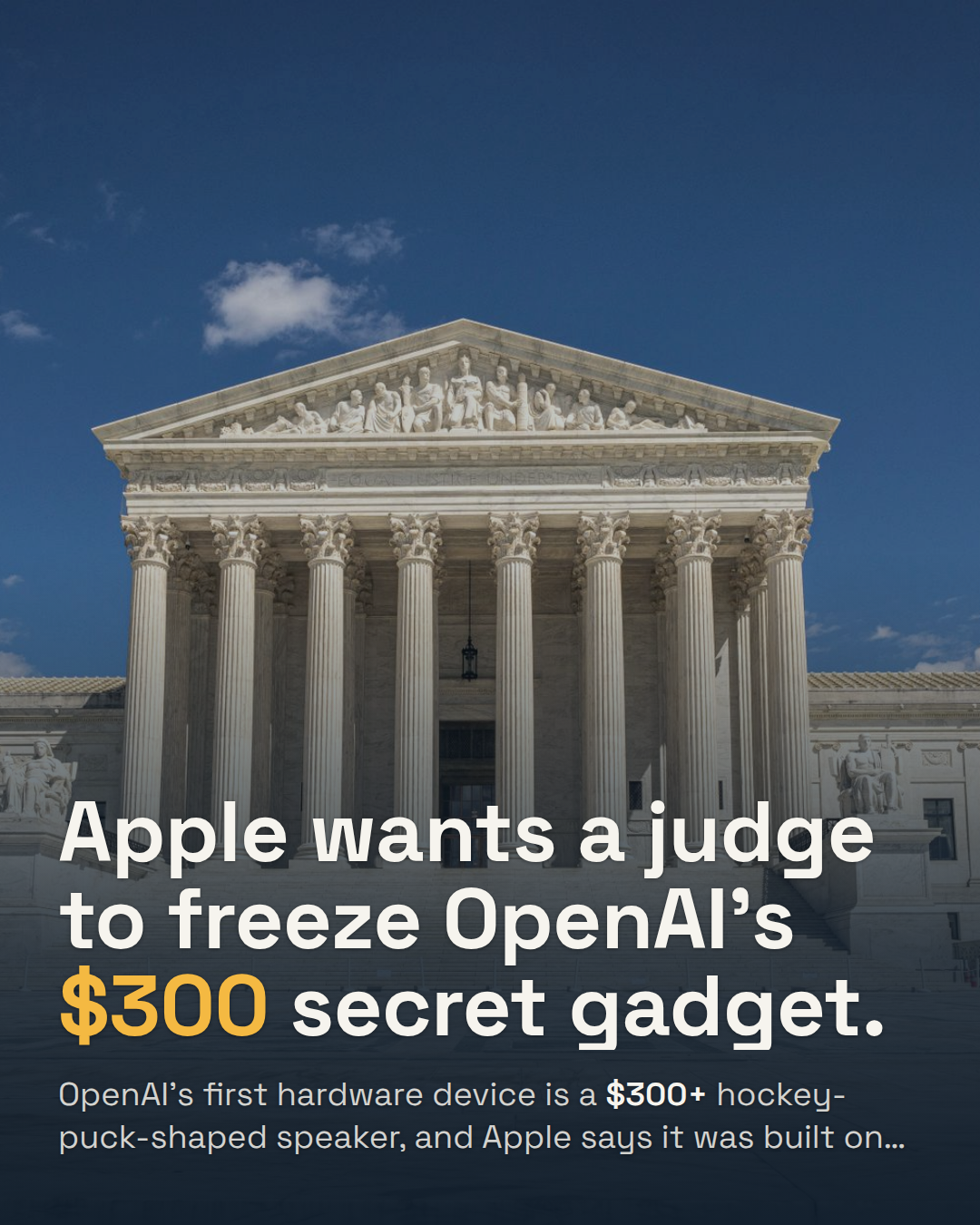
Apple asked a federal judge to freeze OpenAI's first hardware device before it ships, and OpenAI just asked the same judge to throw the whole case out.
Fiscedge Academy
Contributing Faculty & Practitioner
News Breakdown · FiscEdge Academy
Apple has asked a federal judge to freeze OpenAI's next product before it ever reaches a store shelf. The product is OpenAI's first piece of hardware: a screen-free, doughnut-shaped smart speaker about the size of a hockey puck, designed with Jony Ive's studio LoveFrom, battery-powered, with cameras, sensors and moving parts meant to signal when it's listening. Bloomberg reported on August 6 that it will cost more than $300 and is expected to ship in 2027.
Apple says it shouldn't ship at all, at least not with what's inside it. Apple's original lawsuit, filed July 10, accuses OpenAI and two former Apple hardware engineers, Tang Tan (Apple's former VP of product design, now OpenAI's chief hardware officer) and Chang Liu (an eight-year Apple systems engineer accused of failing to return a company laptop and downloading confidential files after he left), of running a coordinated campaign to pull trade secrets that fed directly into that device. On August 3-5, Apple escalated with a motion for a preliminary injunction: a request to stop OpenAI, Tan and Liu from using, disclosing or acting on any of the disputed information before the case is even decided. The judge set an October 1 hearing on that motion; OpenAI has until August 17 to respond in writing.
OpenAI didn't wait for October. On August 5 it filed a 31-page motion asking the same judge to throw out Apple's entire complaint, and its argument is not "we didn't do it." It's "you never protected it." The filing argues Apple let employees run work on personal iCloud accounts and never revoked their system access after they left, undercutting the legal bar that information has to clear to count as a trade secret at all. One line from the filing: "Apple should not be permitted to use a baseless and pretextual lawsuit to make up for its shortcomings in the market for talent and retaining its employees, and its failures to integrate AI into its products." The word "fail," in one form or another, shows up in that document nearly fifty times.
The signal under the headline
The hockey puck is the least interesting part of this. The real story is that the AI hardware race has stopped being a product race and started being a legal one. Apple isn't just worried about a rival gadget: it's trying to use the courts to slow down the one company that hired away the people who used to build its hardware roadmap. That's a strategy every well-funded incumbent now has access to, and every startup poaching senior talent from one needs to plan around.
Why the offboarding argument matters more than the product
OpenAI's defense is the part worth studying, because it flips the usual trade-secret script. Most of these cases turn on whether the departing employee took something. OpenAI is arguing Apple's own security hygiene, personal iCloud use for work, no access revocation on exit, means the information never legally qualified as a protected secret in the first place. For any founder handling equity docs, product roadmaps, or customer data: sloppy offboarding isn't just an IT problem, it's the thing that can gut your own IP claim two years later when a key hire walks out the door.
The playbook for founders hiring from incumbents
Hiring a VP of product design or a hardware chief away from a company like Apple is a huge signal to the market, and it's also a legal exposure event. If you're the one doing the hiring: get outside counsel to scope exactly what the candidate can and can't bring, document that you told them not to bring anything, and lock down device return and access revocation on their end before day one. If you're the one losing the talent: this case is the reminder that "we'll sue" is a real, budgeted response from a company with more lawyers than you have engineers, and it can freeze a product launch even if you eventually win.
If you remember one thing
A trade secrets lawsuit is rarely about the secret. It's about who controls the pace of the next product cycle, and sloppy access and offboarding hygiene can cost you the case regardless of who's actually right.
We teach how to structure IP, hiring and equity decisions for founders scaling fast in FiscEdge's startup strategy course, and how to build defensible AI products in AI for entrepreneurs. For more on OpenAI's product moves this month, see our breakdown of its recent API pricing cuts. Browse the full blog. Follow @fiscedge for daily Business & AI analysis.
Topics & Categorization:
How interesting did you find this article?